Where Evolution Becomes Personal
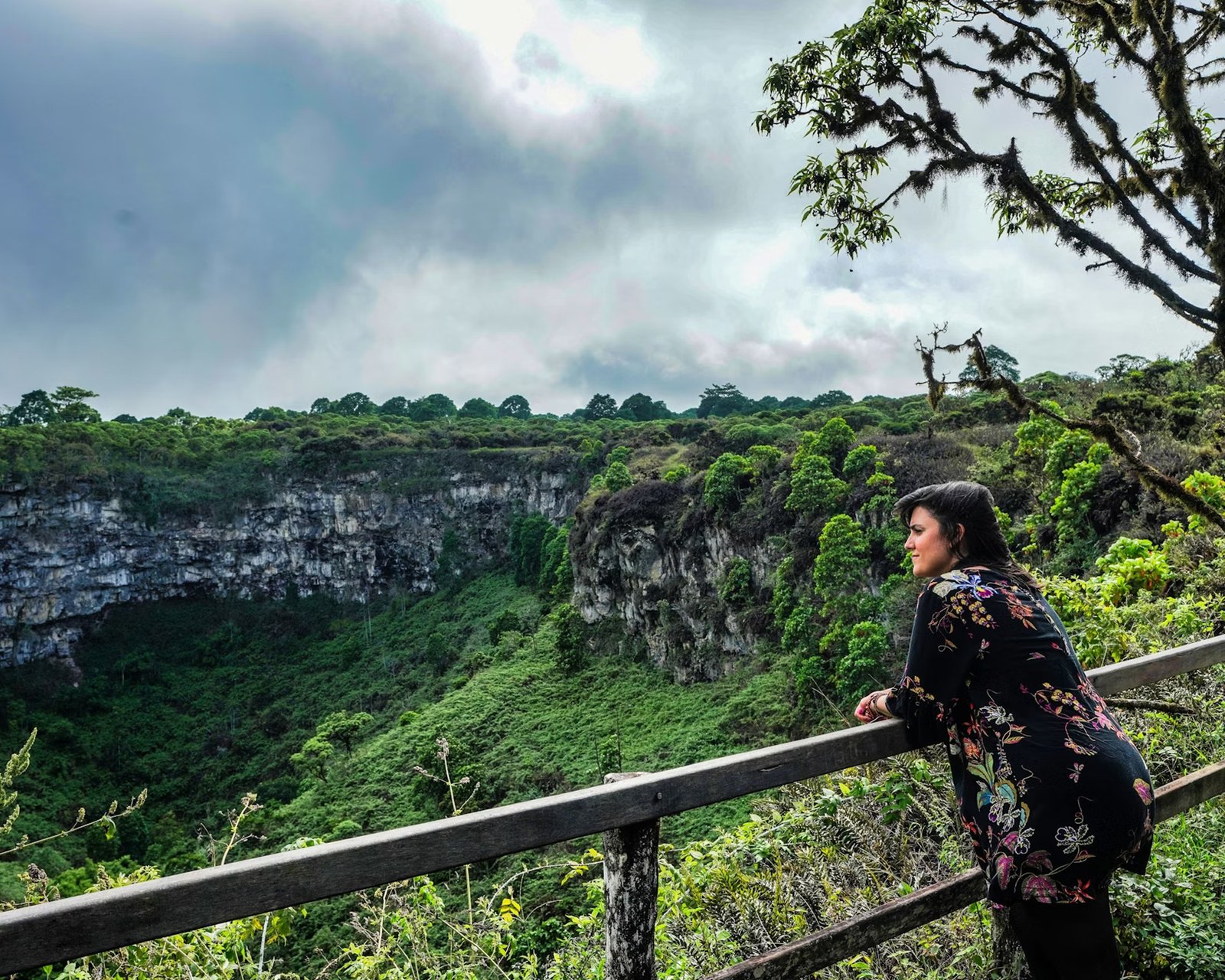
The Galápagos Islands, located 1,000 km off the coast of Ecuador, are one of the world’s most iconic destinations for nature lovers. Declared a UNESCO World Heritage Site and Biosphere Reserve, this volcanic archipelago is famous for its unique biodiversity that inspired Charles Darwin in his theory of evolution.
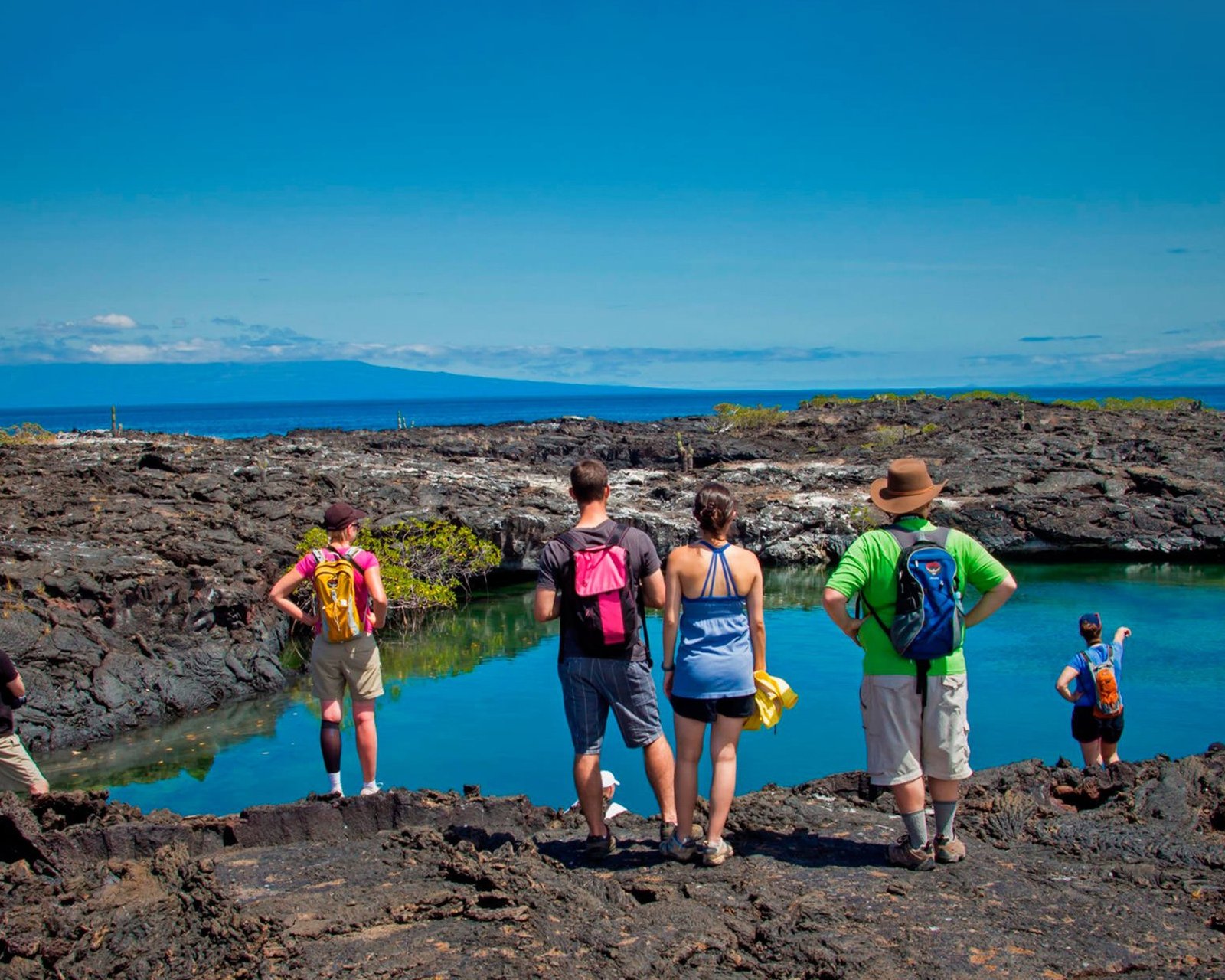
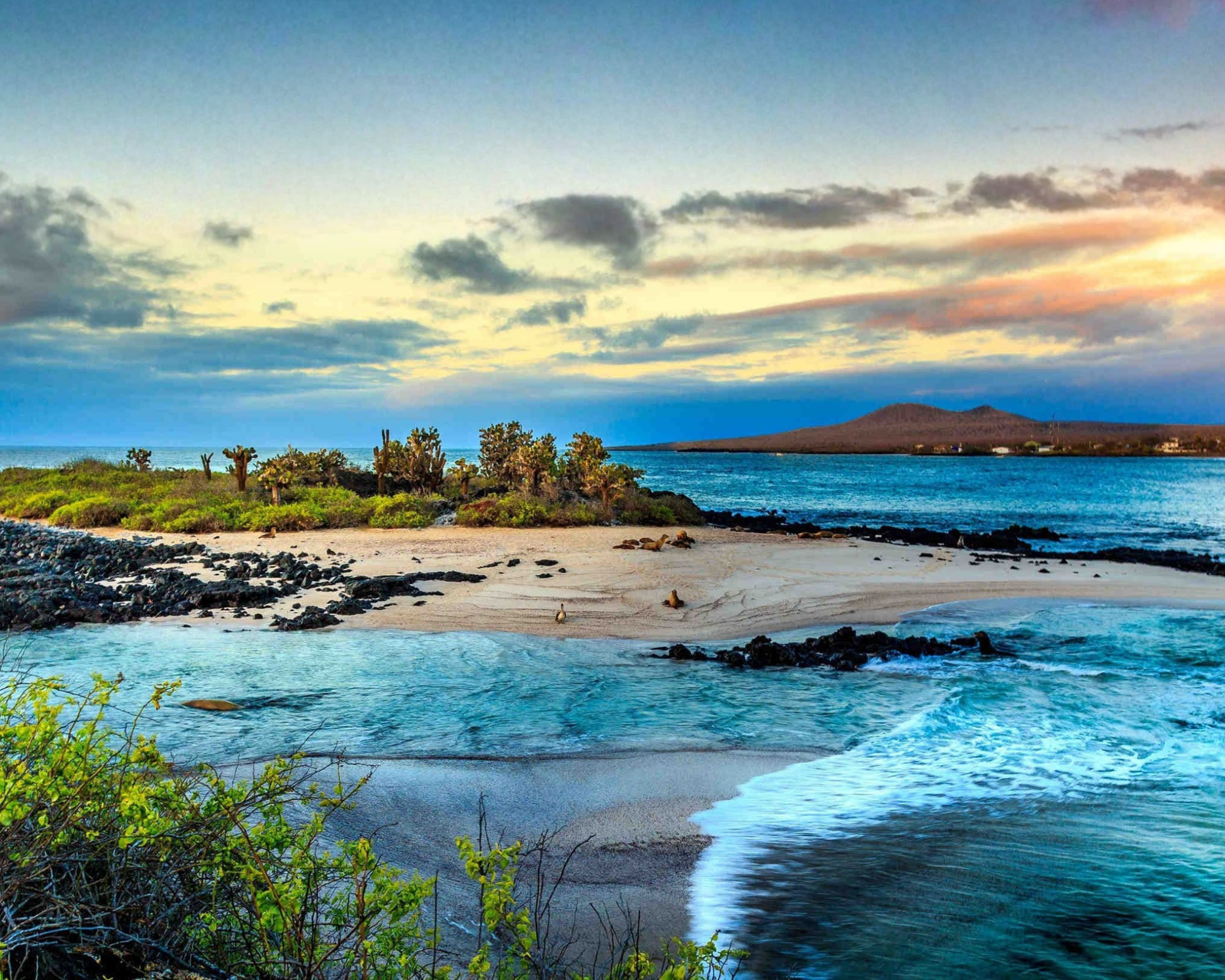
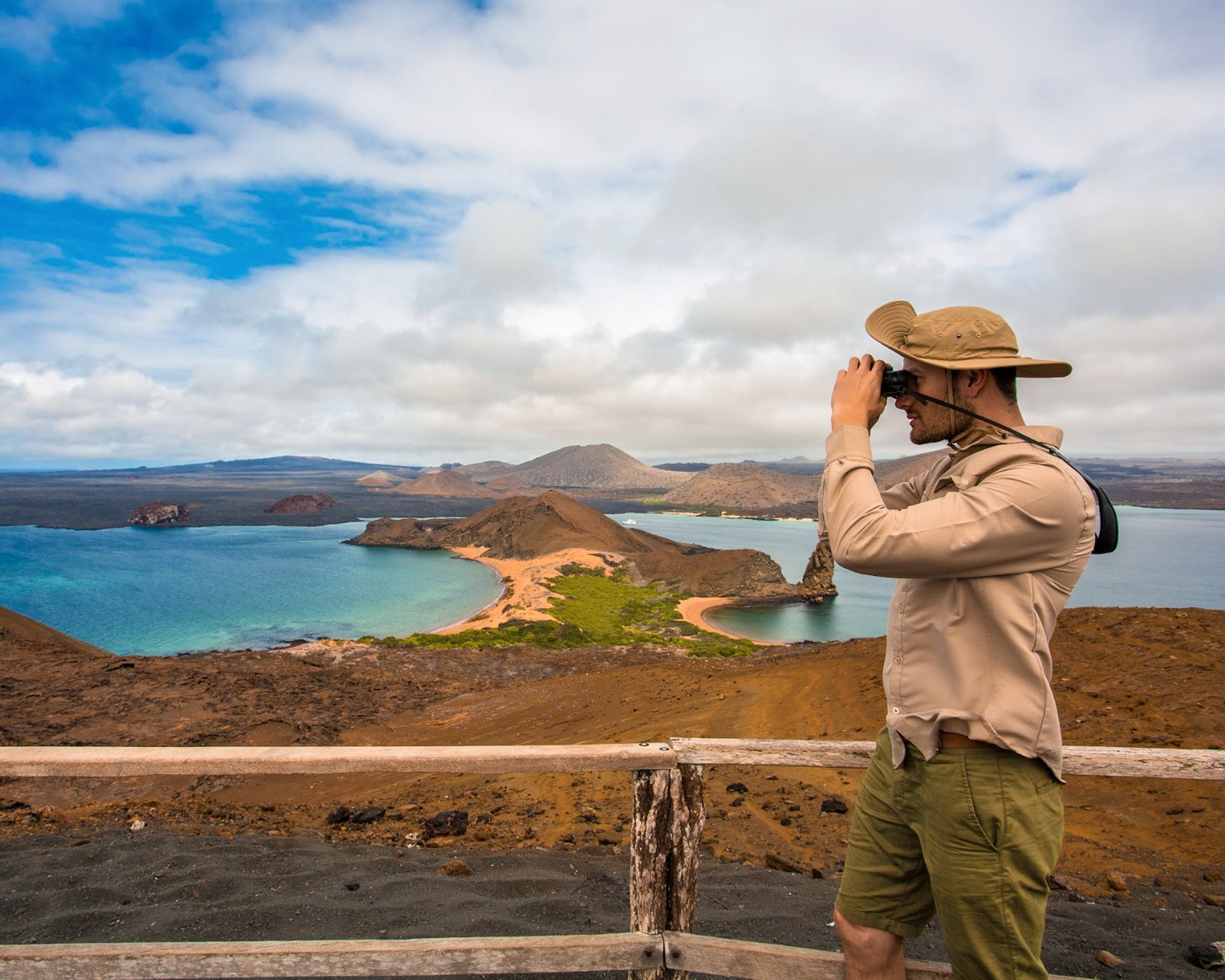
Tourism in Galápagos centers on conservation and ecotourism, with strict regulations to protect its fragile ecosystem. You’ll explore surreal landscapes ranging from white sand beaches and turquoise waters to volcanic craters and forests of giant cacti.
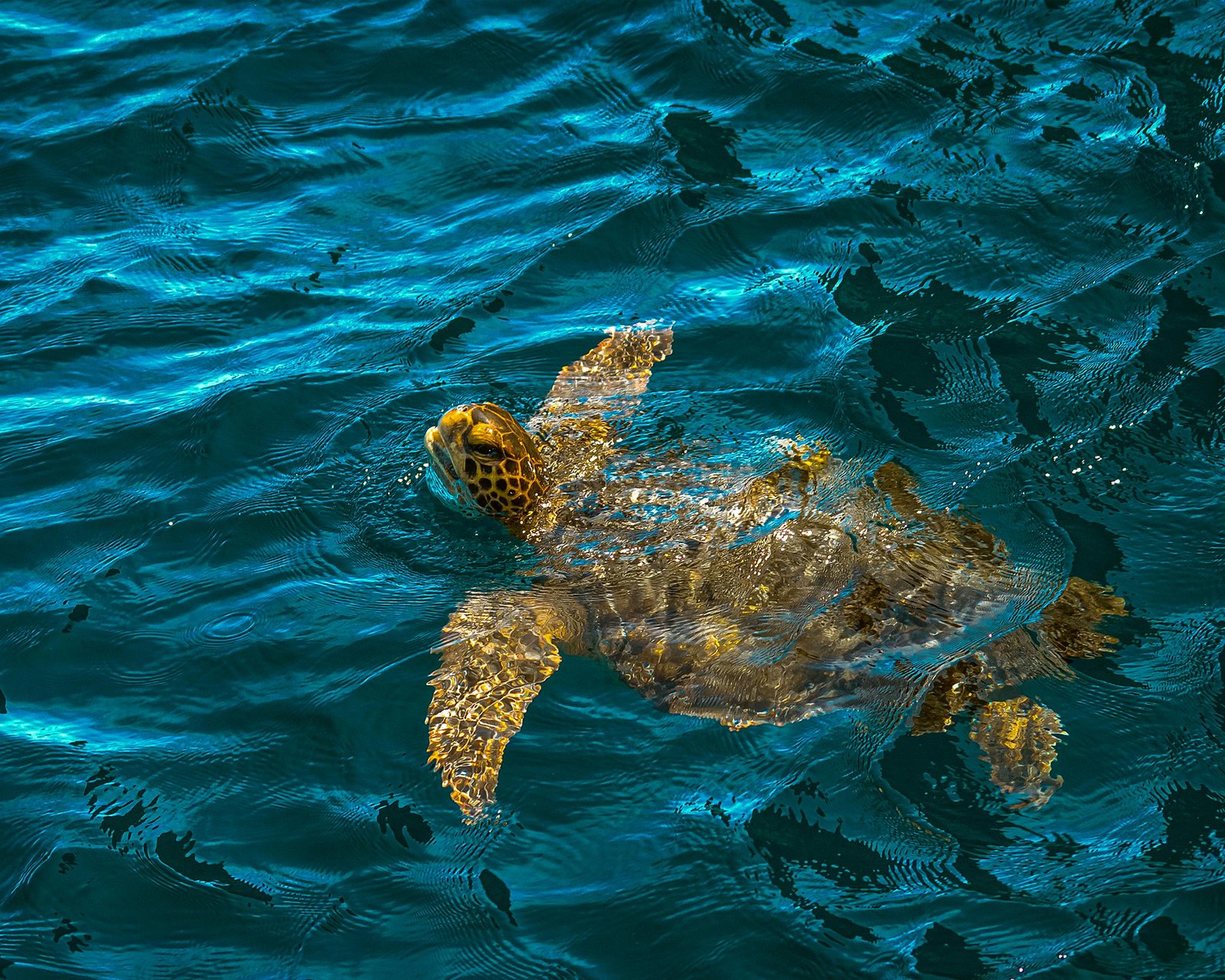
But one of the greatest draws is its endemic fauna, including giant tortoises, marine iguanas, and especially an astonishing variety of birds that will leave you breathless.
Fascinating fact: Galápagos is home to 56 native bird species, 45% of which are endemic. But the true magic isn’t in the numbers—it’s in how they make you feel part of something ancient, essential, and impossibly alive.
To visit this unique destination, you have two alternatives:
- Once on the islands, you can stay in Santa Cruz, San Cristóbal, or Isabela and take boat or land excursions to explore the different sites regulated by Galápagos National Park. It’s a more relaxed way to feel the islands, with time to breathe each experience and sleep on solid ground each night.
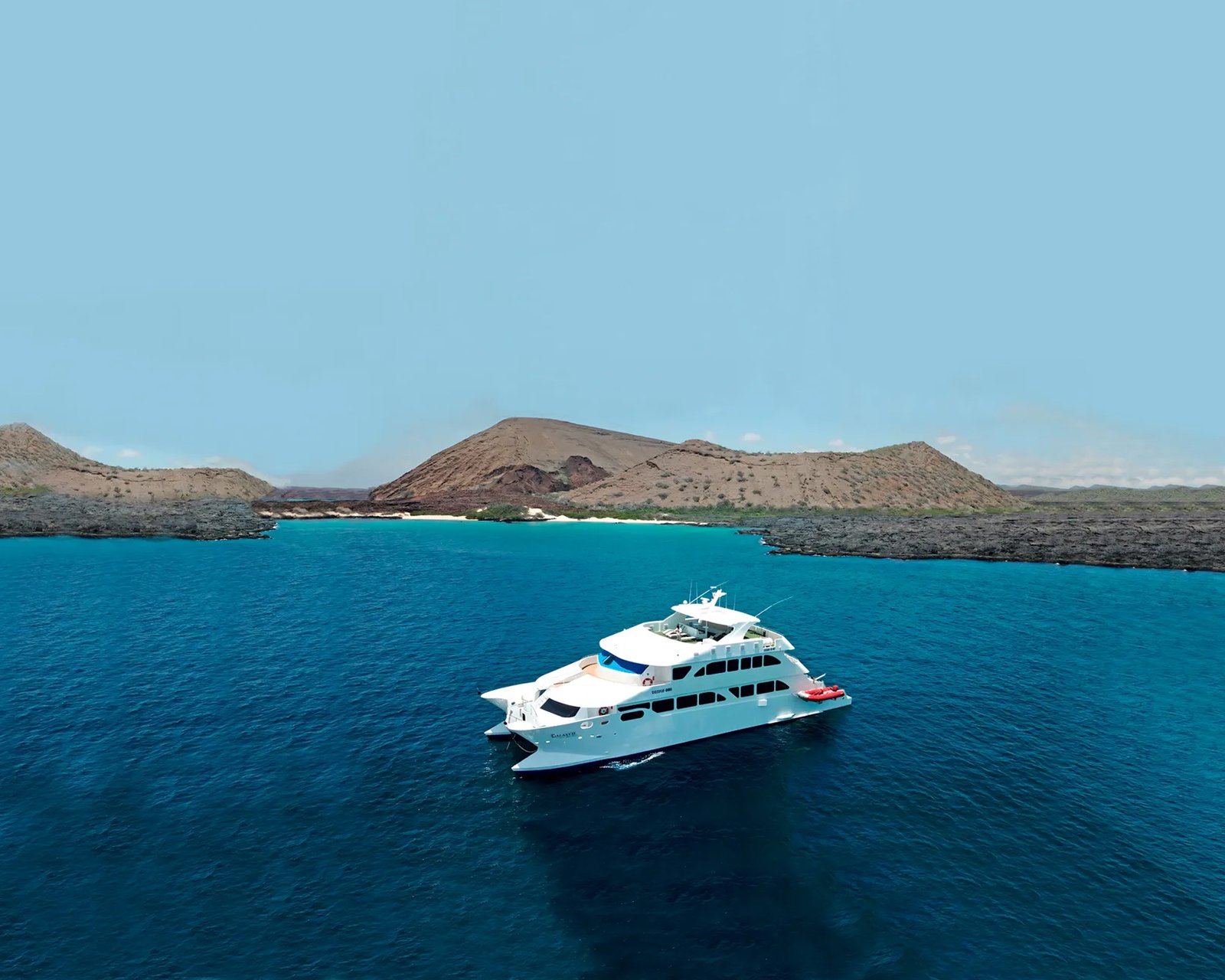
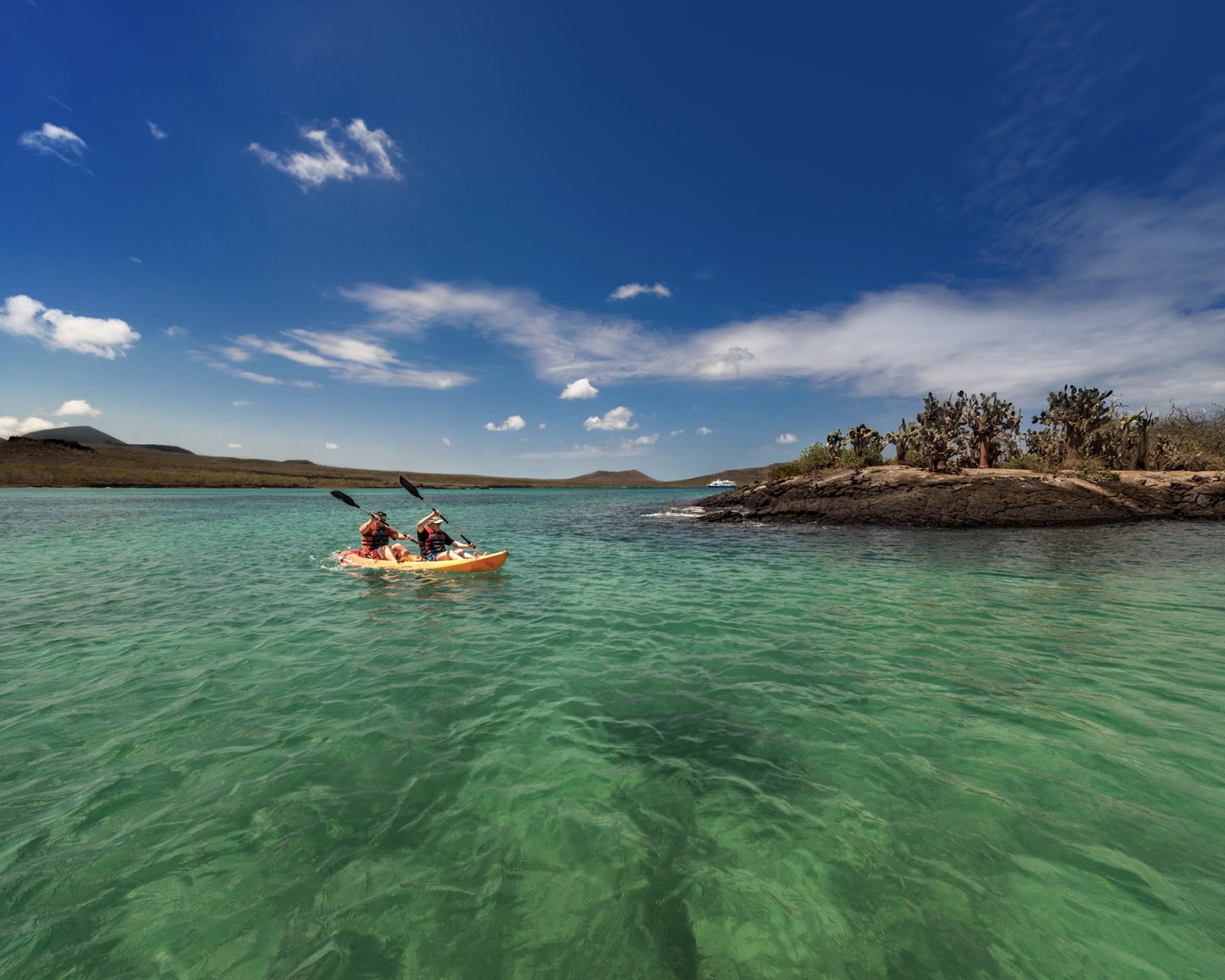
- Another option is to take a cruise that travels through the islands and their beaches, letting you experience the maritime adventure to the fullest. You’ll wake up each morning in a new corner of paradise, surrounded by infinite ocean.

Galápagos Birds: A Paradise for Birdwatchers
Galápagos is home to 56 native bird species, of which 45% are endemic. Birdwatching tourism has grown remarkably in recent years, attracting experts and enthusiasts from around the world who come not just to see, but to feel the unique behavior of creatures that know no fear.
Some of the most outstanding species:
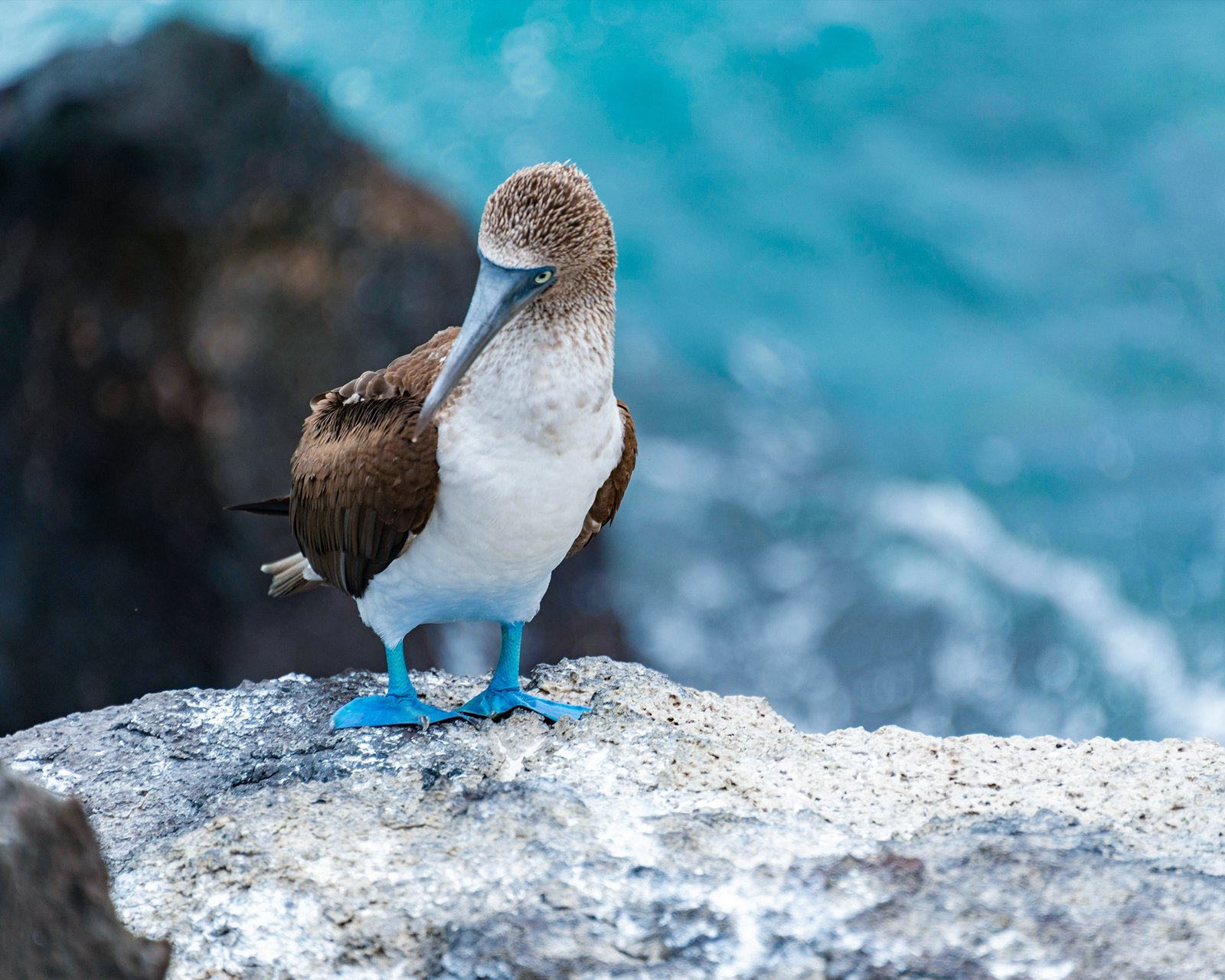
- Blue-footed boobies (Sula nebouxii): Famous for their vibrant blue feet and peculiar mating dance that turns awkwardness into evolutionary art. Watching them dance is witnessing instinct become spectacle.
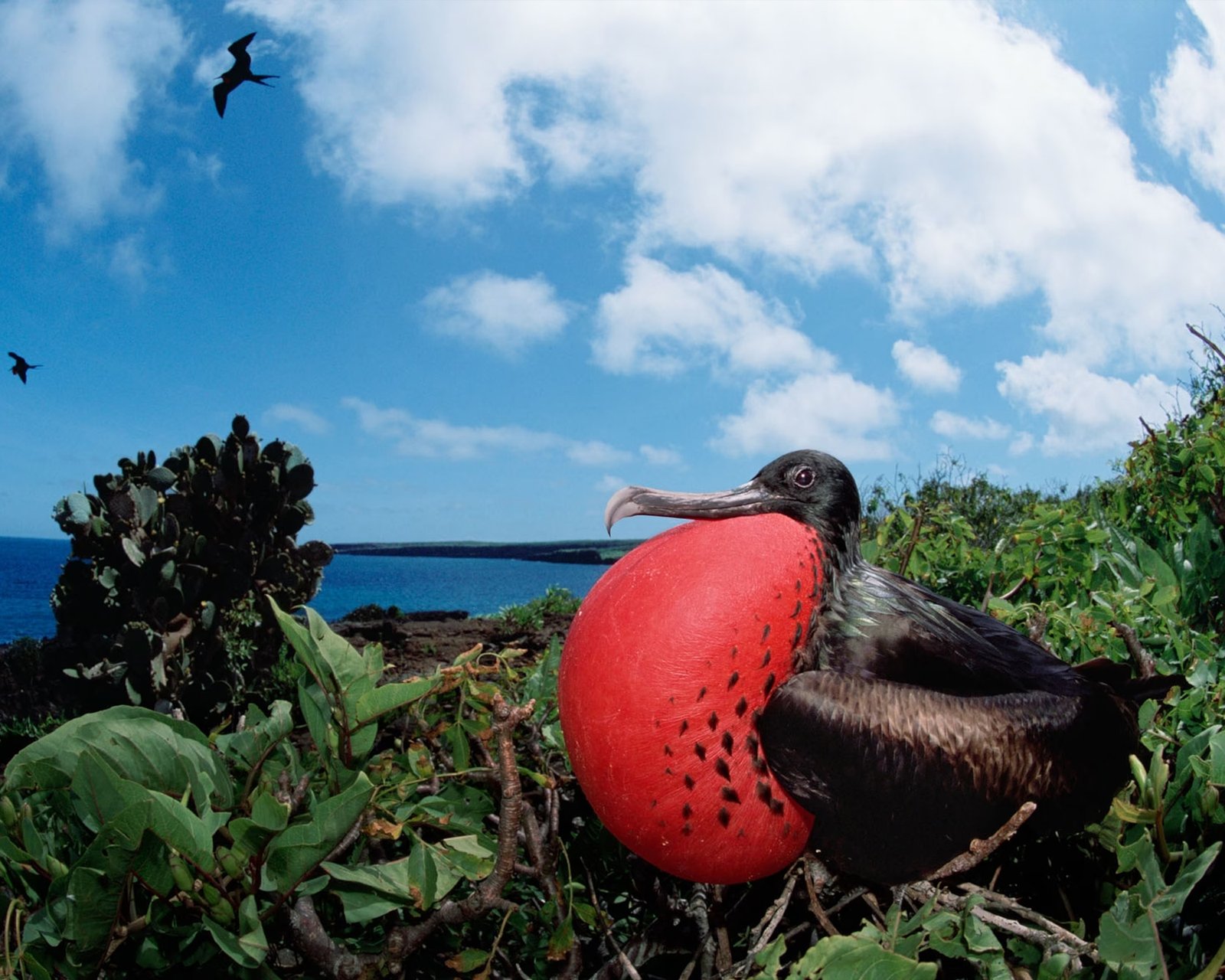
- Magnificent frigatebird (Fregata magnificens): With their red gular pouch that males inflate like a giant balloon during courtship, they’re masters of flight and food theft. They’re sky pirates, and observing them is seeing survival with elegance and audacity.
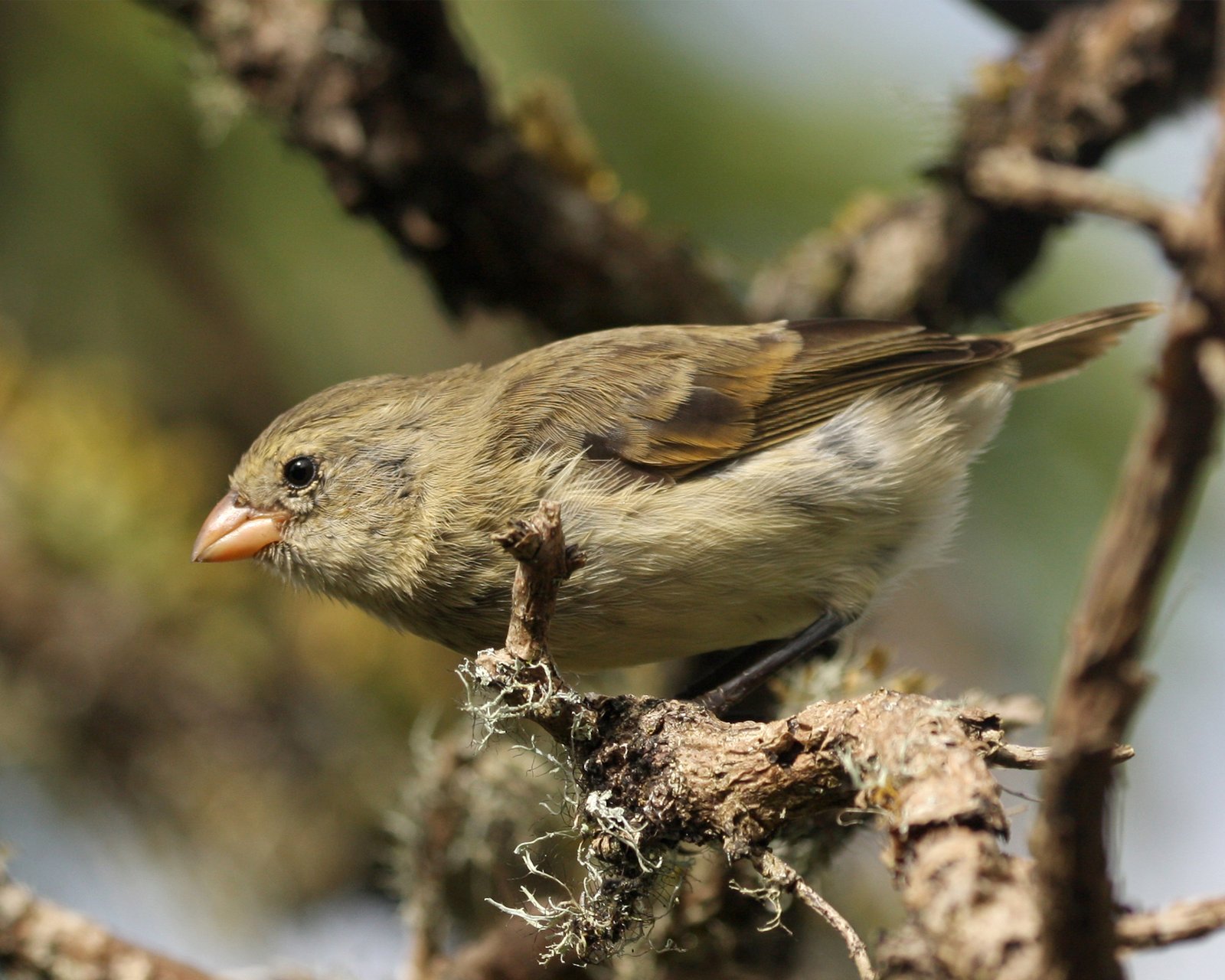
- Darwin’s finches (Geospizinae): A group of 13 species that were key to the theory of evolution. Small, seemingly discreet, but fundamental to understanding how life adapts and persists. Seeing them is touching the history of science with your own eyes.
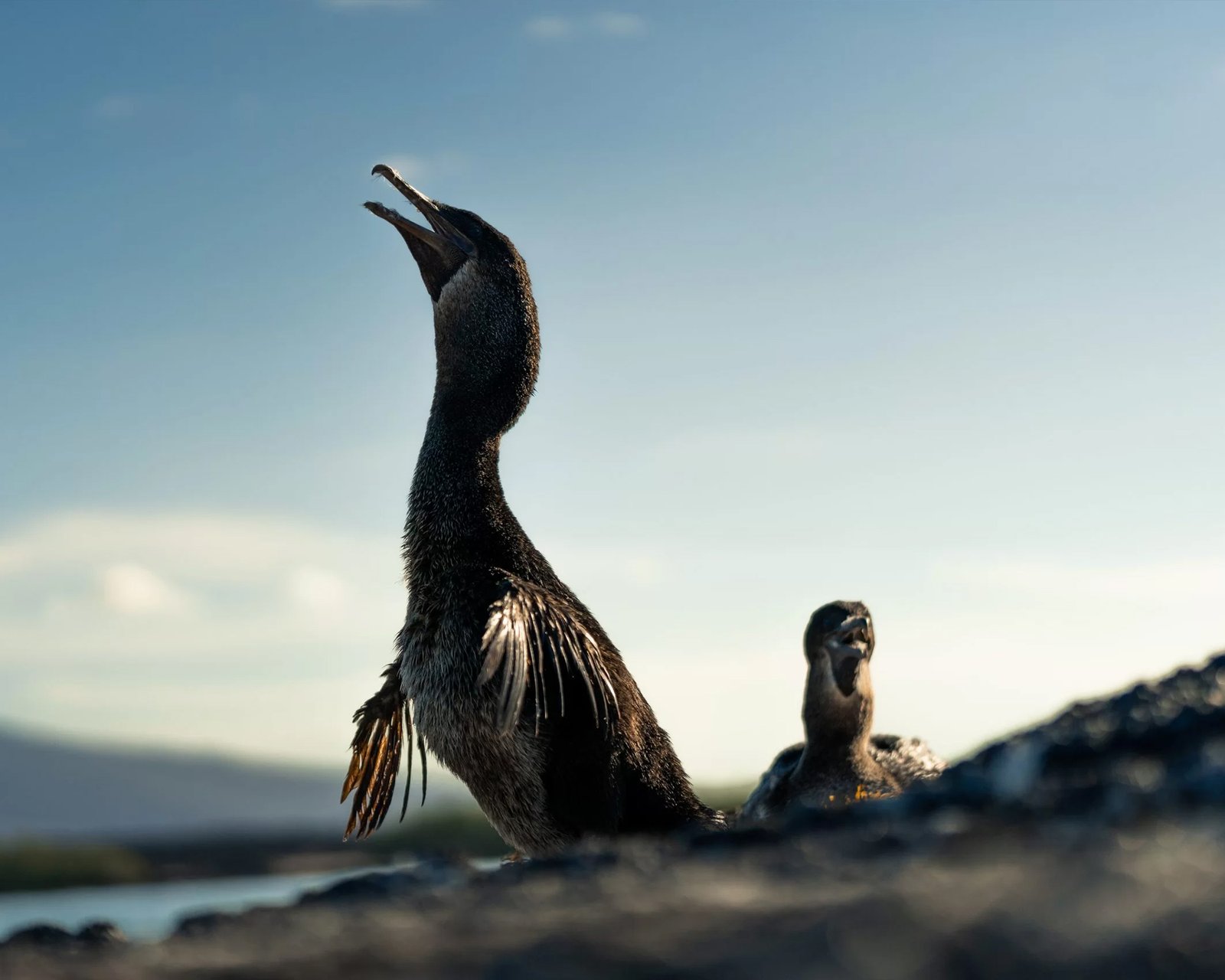
- Flightless cormorant (Phalacrocorax harrisi): The only cormorant in the world that lost the ability to fly. Their tiny wings, useless for air but perfect underwater, remind you that evolution doesn’t always add—sometimes it removes the unnecessary to perfect the essential.
Specialized tours offer expeditions to areas like Genovesa (Bird Island) or Punta Pitt (San Cristóbal), where colonies of seabirds concentrate in a symphony of squawks, fluttering, and color. It’s impossible not to feel overwhelmed when you’re surrounded by wildlife that completely ignores you, allowing you to be an invisible witness to their existence.
How to Reach the Galápagos Islands
To visit them, you first need to reach mainland Ecuador and then take a flight from there. Here’s a step-by-step guide to organizing your journey.
1. International Flight to Ecuador
Main entry airports:
- Mariscal Sucre International Airport (UIO) – Quito
- José Joaquín de Olmedo International Airport (GYE) – Guayaquil
2. Flight from Ecuador to Galápagos
The only airports receiving commercial flights in Galápagos are:
- Seymour Airport (GPS) – Baltra Island (main access)
- San Cristóbal Airport (SCY) – San Cristóbal Island
Flight duration:
- From Quito: ~2 hours (with stopover in Guayaquil)
- From Guayaquil: ~1 hour 30 minutes (direct flights)
Recommendations:
- Book in advance, especially during high season (June-September and December-January).
- Arrive early at the airport (additional controls are required to enter Galápagos).
- Bring cash: Not all places accept cards.
- Light luggage: Airlines typically have weight restrictions for Galápagos flights.
Requirements to Enter Galápagos:
- Valid passport (for foreigners).
- Transit Control Card (TCT) – USD 20 (acquired at the departure airport in Ecuador).
- Luggage inspection (to prevent the entry of prohibited products that could affect the ecosystem).
- Conservation fee payment – USD 100 (foreigners) / USD 6 (Ecuadorians).
These requirements may seem rigorous, but each control exists for a reason: protecting one of the planet’s most fragile and valuable ecosystems. Feeling Galápagos also means respecting it.
A Remote Destination That Deserves the Best Experience
Galápagos is a protected, regulated, and remote destination. Tourism here centers on conservation and ecotourism, with strict regulations to protect its fragile ecosystem. This means infrastructure is limited, quotas are controlled, and the quality of the experience largely depends on choosing responsible operators, specialized guides, and services that respect both the traveler and the environment.

It’s not a destination to improvise. The distances between islands, changing weather conditions, and the need for permits and coordination make it essential to have a well-designed itinerary. That’s why at Feel South America we create personalized experiences where every detail is crafted so you can live the magic of Galápagos without sacrificing comfort, safety, or the deep respect this place deserves.
An Experience That Rewrites Your Understanding of Nature
Few places on Earth have the power to shift your perspective on life itself. Galápagos does this effortlessly. When a giant tortoise looks at you with eyes that have seen decades pass, when a seal pup swims circles around you out of pure curiosity, when you realize the birds don’t fly away because they’ve never learned to fear humans—something fundamental changes inside you. You stop being a tourist and become a witness to evolution in real time.
This isn’t about collecting passport stamps or checking boxes on a bucket list. It’s about standing face-to-face with species that exist nowhere else, walking through landscapes that feel borrowed from another planet, and understanding viscerally that we share this world with creatures whose existence is as valid and precious as our own. Galápagos strips away the noise and reminds you what matters: connection, wonder, humility.
At Feel South America, we craft itineraries that prioritize depth over distance. We work with expert naturalist guides who reveal not just what you’re seeing, but why it matters. We choose accommodations and vessels that respect the delicate balance of these islands while ensuring your comfort. Every detail exists to facilitate genuine encounters—the kind that stay with you long after you’ve returned home.
Ready to discover what Galápagos awakens in you? Share your vision with us, and we’ll design the journey that brings it to life.